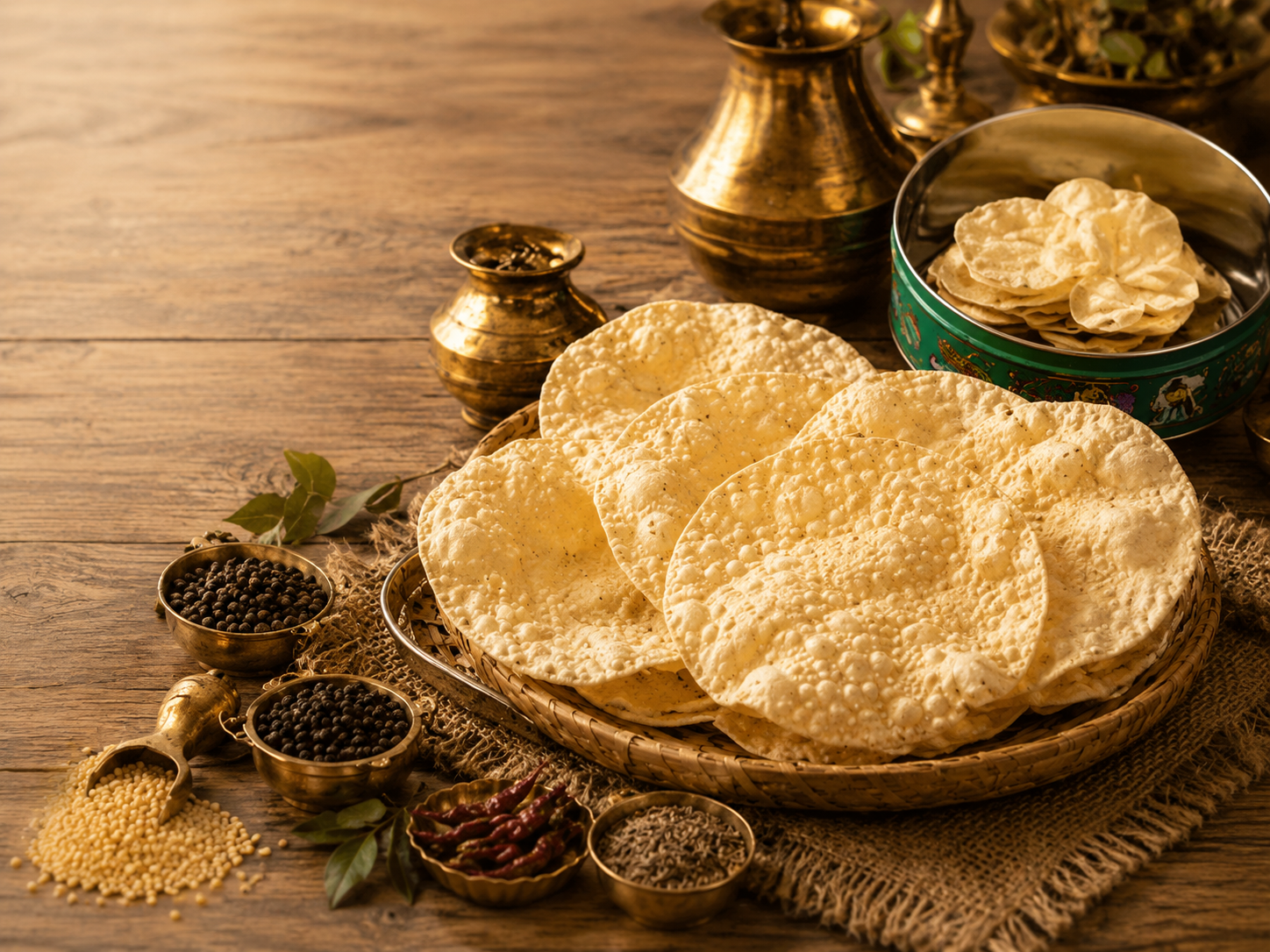
- •Tamil Nadu & South India: Urad dal-based, thin and crispy (our appalam)
- •Rajasthan: Thick moong dal or wheat papads, often sun-dried in the desert heat
- •Maharashtra: Sabudana (sago) papads with cumin
- •Gujarat: Rice flour papads, often flavoured with sesame seeds
- •Punjab: Hearty whole wheat papads with chilli
Ancient Origins
The history of papad in Indian cuisine stretches back over 2,000 years. Ancient Sanskrit texts including the *Arthashastra* (c. 300 BCE) contain references to thin lentil wafers that scholars believe are precursors to the modern papad. These early versions were likely simpler — just lentil flour and water — but the fundamental concept has remained remarkably stable.
Regional Variations Emerge
As Indian cuisine diversified across its vast geography, so did papad. Different regions developed distinctly different styles:
The Mughal Influence
During the Mughal era (1526-1858), papad evolved in North India, becoming more refined and spiced. The imperial courts of Delhi and Agra reportedly served multiple varieties of papad as part of elaborate multi-course feasts. This period saw the development of many flavoured varieties.
Papad in Trade
Papad became one of India's earliest exported food products. Maritime records from the 16th and 17th centuries document traders carrying dried papads on ships as provisions and trade goods. Indian merchants introduced papad to Southeast Asia, parts of Africa, and the Caribbean, where diaspora communities maintain traditions of papad-making to this day.
The Modern Era
The 20th century saw papad transition from a home-made staple to a commercial product. The cooperative movement — most famously Lijjat Papad, founded in 1959 by seven women in Mumbai — transformed the industry and created economic opportunities for thousands of women across India.
South Indian Appalam: A Special Heritage
In Tamil Nadu, appalam has always been more than food — it's part of ritual and celebration. Traditional Tamil weddings serve appalam as part of the feast. The crinkling sound of a freshly fried appalam is inseparable from the sensory memory of a Tamil grandmother's kitchen.
At Nanmai Appalam, we see ourselves as custodians of this rich tradition — making the same authentic appalam that families have loved for generations, with the quality standards of today.
Share this article:
Enjoyed this article?
Try our premium appalams and experience the taste for yourself.
Shop Nanmai Appalam